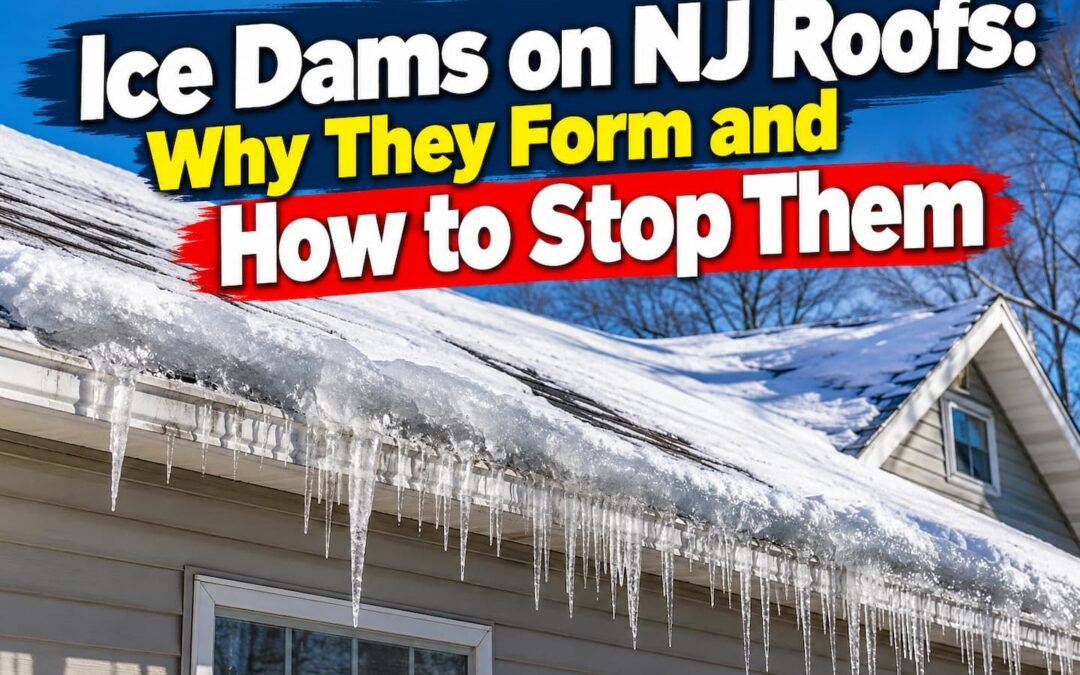
After a snowy week at the Shore, a lot of homeowners look up and see a thick ridge of ice and a row of icicles hanging off the edge of the roof. It looks pretty, but it is often the first sign of ice dams NJ roofs struggle with every winter. Our crew at Jar Roofing Repair gets calls about ice dams NJ homeowners are dealing with, from Neptune to Freehold, usually right after someone spots a brown stain on a bedroom ceiling.
What Is an Ice Dam?
An ice dam is a ridge of ice that builds up along the lower edge of a roof, usually right above the gutters and overhangs. It forms when snow higher up on the roof melts, the water runs down, and it freezes again once it reaches the colder edge of the roof. GAF, the shingle manufacturer we work with most, explains in its technical bulletin on ice dams that the ice then blocks the next round of meltwater, which can back up under the shingles. Farther up the roof, where the attic is warmer, that water may not freeze at all and can find its way into the house.
Ice Dams NJ: Why the Problem Starts in the Attic
Most people blame the gutters, and clogged gutters can make things worse, but the real cause of most ice dams NJ homeowners see is heat. Here is what we find most often when we climb into attics in Asbury Park, Long Branch and Red Bank:
- Warm air leaking into the attic. Gaps around recessed lights, plumbing vents, wiring holes, chimneys and attic hatches let heated air from the living space rise into the attic. University of Missouri Extension points to these same spots and recommends sealing them so warm air cannot flow from the house into the attic.
- Thin or uneven insulation. When the attic floor is not well insulated, heat moves up and warms the underside of the roof deck.
- Poor attic ventilation. GAF notes that adequate ventilation can lower the attic temperature, which reduces snow melting on the roof. GAF recommends a balanced system with intake at the soffits and exhaust at the ridge. You can read more in our post on roof ventilation tips NJ experts recommend.
Insulation and ventilation work as a team. One without the other usually does not solve the problem, so our crew looks at both during a roof inspection.
Signs You Have an Ice Dam Problem
- A thick band of ice along the eaves, with large icicles hanging from the roof edge
- Water stains or peeling paint on ceilings or upper walls near exterior walls
- Damp or matted insulation in the attic, or frost on the underside of the roof deck
- Shingles that look lifted, cracked or loose along the lower edge of the roof
Our post on warning signs your roof may not be ready for winter in New Jersey covers other things to check this time of year.
How to Remove Ice Dams Safely
When there is already ice on the roof, the goal is to get the water draining again without hurting the shingles or yourself. A few ground rules from our crew:
- Stay off the roof. A snowy, icy roof is one of the most dangerous places to work. Extension specialists say this kind of work is best left to professionals, and we agree.
- Use a roof rake from the ground. Pulling the bottom few feet of snow off the roof with a long-handled roof rake takes away the fuel for the next ice dam.
- Never chop or pry the ice. Hammers, axes and shovels can crack shingles and tear the underlayment, which turns a small problem into a bigger leak.
- Call a pro for active leaks. If water is coming inside, a roofer can open channels in the ice so water can drain, then make temporary repairs. See our guide to emergency roof repair in NJ for what to do while you wait.
Removal only treats the symptom of the ice dams NJ homes keep running into. If the attic keeps losing heat, the ice will come back with the next snowfall.
Long-Term Prevention: Insulation, Ventilation and Ice and Water Shield
Seal and insulate the attic floor
Air sealing the gaps between the living space and the attic is usually the first step, followed by adding insulation where it is thin. Keep insulation from blocking the soffit vents so air can still move along the underside of the roof deck.
Balance the ventilation
A good system pulls cold outside air in at the soffits and lets warm, moist air out at the ridge. Our crew checks the whole path, not just the ridge vent.
Ice and water shield at the eaves
Ice and water shield, also called a leak barrier or ice barrier underlayment, is a self-adhering membrane installed under the shingles along the eaves, in valleys and around penetrations. GAF recommends extending it at least 24 inches beyond the “warm wall” of the house. Under the New Jersey building code, an ice barrier is required in areas where the average daily January temperature is 25°F or less. The NJ Department of Community Affairs bulletin identifies Sussex County as that area, so most homes in Monmouth and Ocean counties are not required to have it.
Even so, our crew strongly recommends it on any re-roof here, because ice dams still form along the coast and in towns like Manalapan, Marlboro and Old Bridge. The membrane is an extra layer of protection, not a replacement for good insulation and ventilation.
Roof Leak Damage From Ice Dams
Water from an ice dam often leaks slowly and quietly. By the time you see a stain, the roof deck, insulation and drywall may already be wet. GAF points out that wet insulation can lose its ability to perform over time, which means more heat loss and more ice next storm. For more on how winter weather wears down a roof, read our post on winter roof damage, and our list of common roof leaks we repair in NJ.
Repair costs depend on several things: how long the water has been getting in, whether the decking or insulation needs replacing, the roof pitch and height, how much of the roof is affected, and whether the attic needs ventilation or insulation upgrades. The only honest way to know is to look at it in person.
When to Call a Local Roofer
Call a roofer if water is coming inside, if ice dams come back every winter in the same spot, if shingles along the eaves look damaged, or if you are planning a roof replacement and want ice and water shield done right. Javier started in this business doing repairs more than 20 years ago and our crew handles winter leaks across Monmouth and Central NJ, from Tinton Falls and Wall Township down to Brick, Toms River and Point Pleasant.
As a GAF Master Elite Certified Contractor, we install GAF leak barriers, underlayments, shingles and ventilation as one system, and we stand behind our work with warranties on labor and materials. We are fully insured and handle repairs and full replacements.
Frequently Asked Questions
Are ice dams common in New Jersey?
Yes, ice dams NJ homeowners deal with are not unusual. Our crew sees them after a good snowfall followed by cold nights, especially on homes with warm attics, and they can form anywhere from the Shore to inland towns.
Can I chop the ice off or melt it with a torch?
No. Chopping, prying and open flames can damage shingles and underlayment. Raking snow off from the ground is safer, and an active leak is a job for a roofer.
Is ice and water shield required in Monmouth County?
According to the NJ Department of Community Affairs, the code requirement applies where the average daily January temperature is 25°F or less, which the state identifies as Sussex County. It is still a smart upgrade for homes here, and our crew recommends it on re-roofs.
Is the roof inspection free?
It depends on where you live. Estimates and inspections are free in some of our service areas and paid in others, so give us a call and we will tell you up front.
Talk to Jar Roofing Repair About Ice Dams This Winter
If you are dealing with the ice dams NJ winters bring, a winter leak, or you want your attic and roof checked before the snow, our family-run crew is here to help. Call Jar Roofing Repair LLC at (732) 682-5451 or contact us online. You can find us at 3030 W Bangs Ave, Neptune, NJ 07753, and 2 Industrial Way West, Suite 301, Eatontown, NJ 07724. We serve homeowners and businesses across Monmouth County and Central New Jersey.